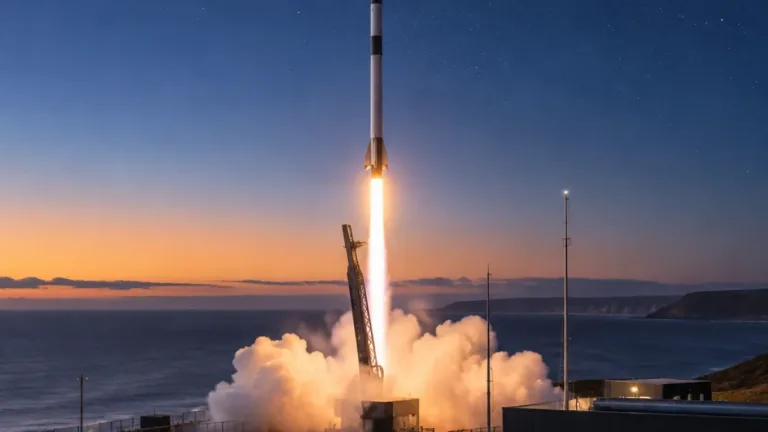
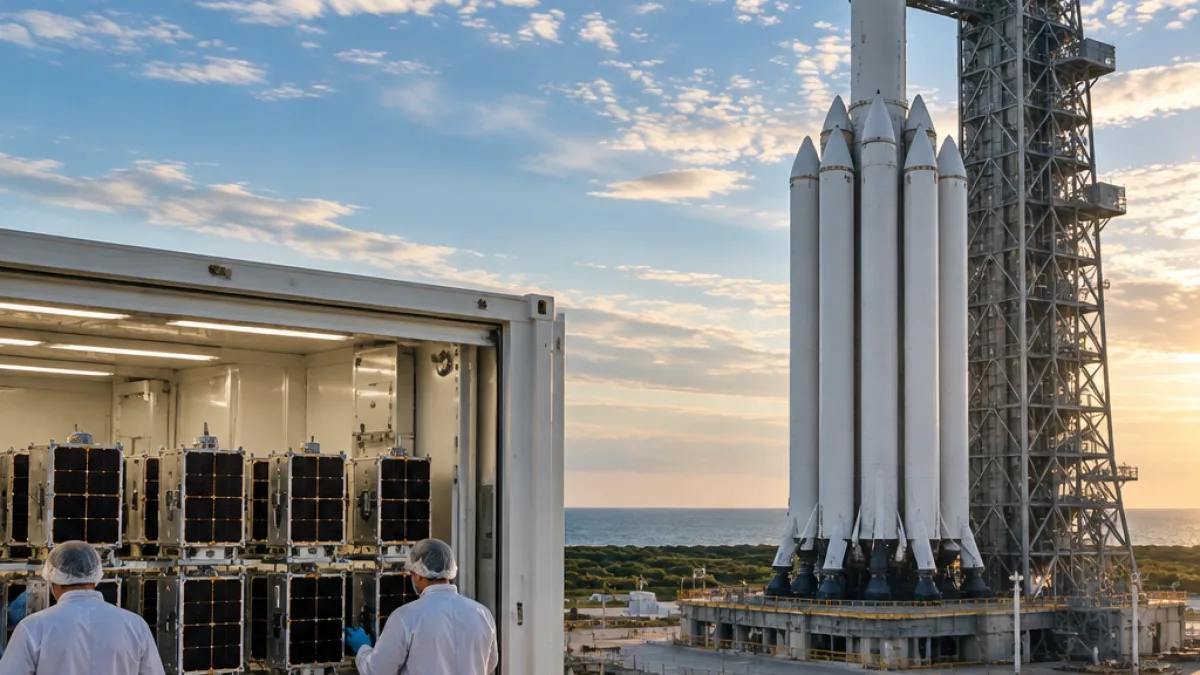
United Launch Alliance is scheduled to return its Vulcan rocket to flight on Friday, November 13, 2026, carrying 40 Amazon Leo broadband satellites into orbit. The mission comes nine months after a solid rocket booster malfunction led the U.S. government to pause the rocket’s use, putting fresh attention on the reliability of the launch system and on Amazon’s plans for a large low-Earth-orbit satellite network.
The launch, designated Amazon Leo LV-01, is set for 12:54 pm EST from Space Launch Complex 41 at Cape Canaveral Space Force Station. The launch window is scheduled to remain open for 29 minutes. Weather forecasters with the Space Force put the probability of acceptable conditions at 90%, with scattered high clouds and northwest winds of 15 to 20 knots.
A redesigned component will fly for the first time
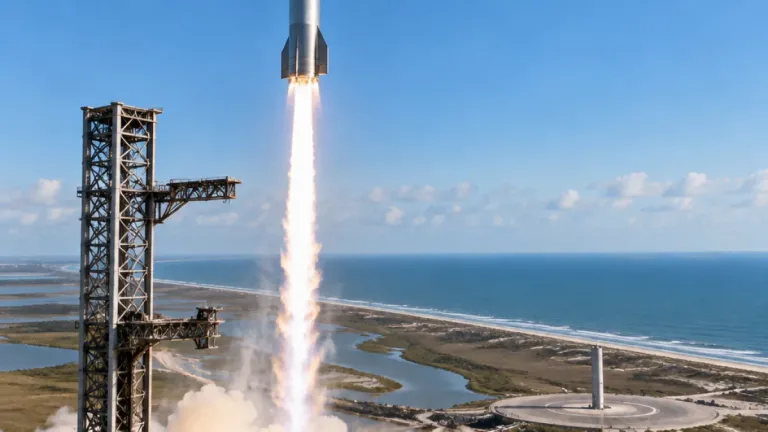
Vulcan will use six solid rocket boosters and two Blue Origin-manufactured BE-4 engines on its first stage. The rocket stands 215 feet tall and is designed for one use rather than recovery and reuse. The mission will be the first flight of a redesigned booster nozzle, a component that failed on half of Vulcan’s first four flights.
The latest failure occurred on February 12 during a Space Force national security mission. An investigation into that incident remains open. The return-to-flight mission therefore combines a commercial delivery with a test of whether the design change can address a component problem that has affected the rocket’s early operational record.
“The launch will be the first flight of a redesigned booster nozzle — a part that failed on half of Vulcan’s first four flights.”
Amazon has ordered 38 Vulcan missions
Amazon is the private customer for Friday’s flight and has purchased 38 Vulcan launches. The 40 spacecraft on this mission are intended to expand Amazon’s Leo constellation, which is designed to provide broadband internet services from low Earth orbit. The satellites will be deployed after the rocket’s Centaur upper stage completes two burns.
According to the United Launch Alliance mission plan, satellite separation is expected to begin about 70 minutes after liftoff, at an altitude of roughly 285 miles. The deployment will occur through 16 separation events spread over approximately 25 minutes, allowing the spacecraft to be released in stages rather than all at once.
Another test for the BE-4 engine
The mission also marks the first flight of a BE-4 engine since Blue Origin’s New Glenn rocket exploded on the pad during a test in May. New Glenn and Vulcan use the same engine family, although Vulcan’s first stage uses two BE-4 engines that together produce more than 1 million pounds of thrust.
- Customer: Amazon
- Payload: 40 Leo broadband satellites
- Rocket: United Launch Alliance Vulcan
- Launch site: Space Launch Complex 41, Cape Canaveral Space Force Station
- Scheduled liftoff: 12:54 pm EST on November 13
The flight is consequently significant on several fronts: it is Vulcan’s first mission since the government pause, Amazon’s first launch in a planned sequence of 38 Vulcan missions, and a new operational test for the redesigned booster nozzle and BE-4 propulsion system. If the launch proceeds as scheduled, the mission will begin the process of deploying another large batch of satellites for Amazon’s broadband constellation while the investigation into the earlier Vulcan failure continues.