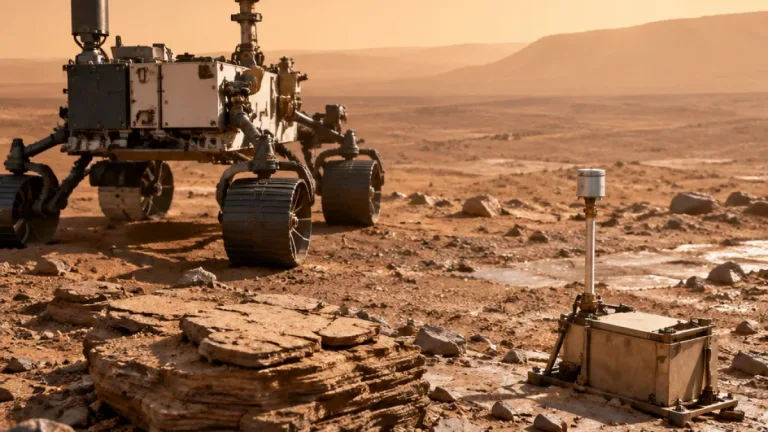
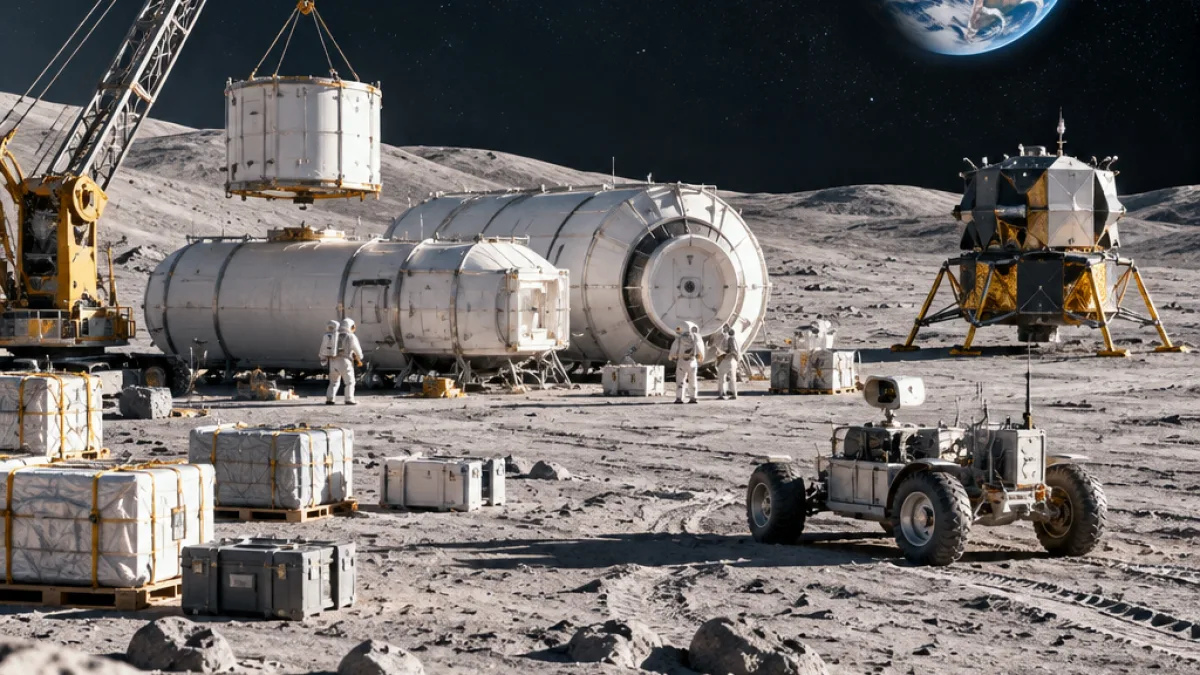
NASA has announced a $20 billion plan to build a permanent base on the Moon over the next seven years, setting out a more sustained lunar program that would move beyond individual missions and toward a continuing human presence. The agency also plans to begin sending astronauts to the lunar surface every six months after the Artemis V mission, which is scheduled for 2028.
The proposal was presented at NASA’s “Ignition” event at the agency’s headquarters in Washington, D.C. Agency leaders described the effort as part of a broader strategy to return astronauts to the Moon, construct infrastructure for long-term operations and maintain US leadership in space. The plan places NASA’s lunar work within an explicitly competitive framework involving China.
A shift from visits to an enduring presence
NASA Administrator Jared Isaacman said the agency intends to return astronauts to the Moon before the end of President Donald Trump’s term and then establish a base. He told representatives of Congress and 35 countries that the program’s objective is no longer limited to a brief landing. The agency is now targeting a sequence of missions that would gradually expand the capabilities needed for people to live and work on the lunar surface.
“But this time, the goal is not flags and footprints. This time, the goal is to stay.” — NASA Administrator Jared Isaacman
The lunar landing schedule includes Artemis IV and Artemis V in 2028. Isaacman said the timing is important in the competition with China, while acknowledging that the two countries could reach key milestones at different times. After Artemis V, NASA hopes to send astronauts to the Moon’s surface at six-month intervals, with commercial space companies assisting the agency as the base develops.
Competition and execution risks
Isaacman framed the initiative as a national effort requiring NASA to focus its resources on the objectives of the National Space Policy. He also called for the removal of obstacles that slow progress and for the participation of the US workforce and industrial partners. The remarks indicate that the proposed base would depend not only on NASA missions but also on a wider network of private-sector companies involved in lunar transportation, equipment and operations.
The plan’s stated $20 billion cost and seven-year construction horizon provide a scale for the undertaking, but the announcement describes an objective rather than a completed program. The schedule depends on Artemis IV and Artemis V launching in 2028 and on the subsequent deployment of commercial support. NASA’s intended six-month cadence would therefore represent a continuing operational commitment after the initial landing missions, rather than a single event.
- Investment: NASA announced a $20 billion plan for the Moon base.
- Schedule: Artemis IV and Artemis V are scheduled for 2028.
- Mission cadence: NASA hopes to send astronauts to the lunar surface every six months after Artemis V.
Isaacman said the agency is working against a timetable measured in months rather than years as the United States competes with China in space. NASA’s stated aim is to use the initial lunar missions to establish the systems and infrastructure for a permanent presence, with commercial space companies playing a role in the gradual buildout.