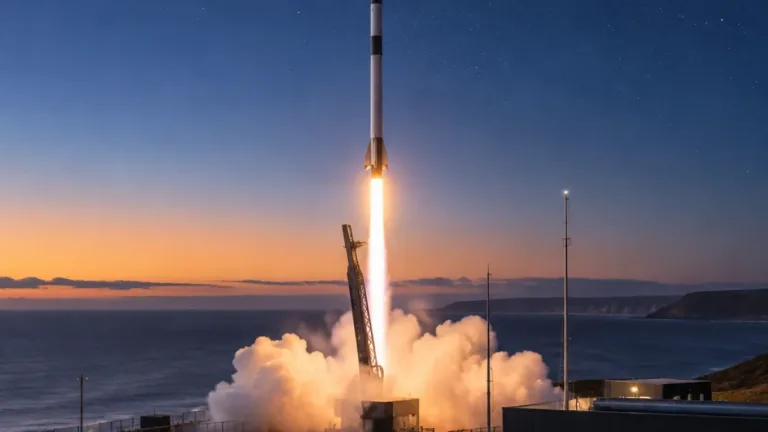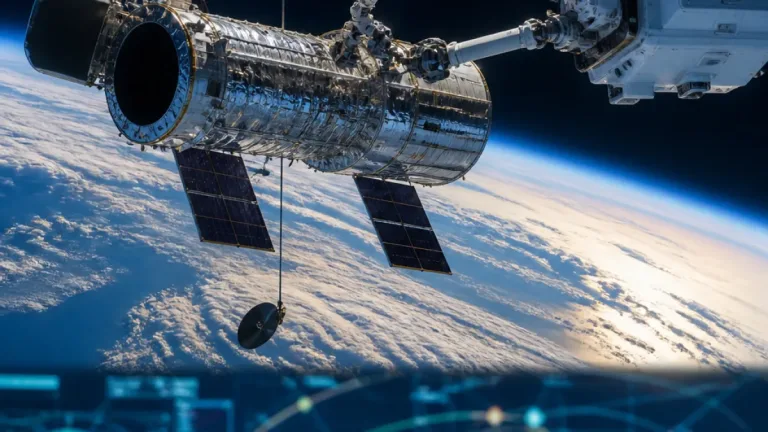
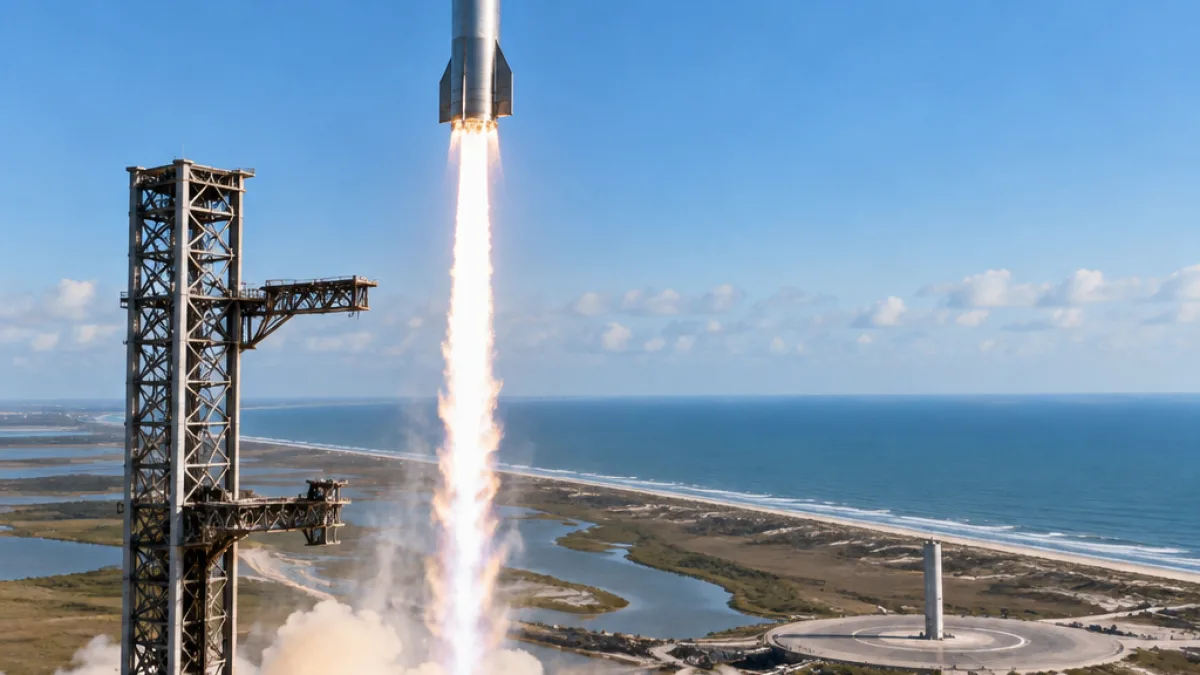
SpaceX’s Starship reached orbit on November 13, 2026, in the company’s most ambitious test yet, but the flight fell short of its full recovery objective after the first-stage booster malfunctioned and was diverted into the Gulf of Mexico.
The company had intended to recover both major sections of the rocket at its Texas launch site. Instead, an automatic abort ended the booster’s return attempt several minutes after liftoff. The spacecraft itself continued on its trajectory and prepared to deploy 26 Starlink satellites, according to the launch report.
A recovery attempt from orbit
The spacecraft is scheduled to complete 15 laps around Earth at an altitude of about 170 miles (275 kilometers). It is then expected to steer toward the Texas pad on Saturday for an attempt to be caught by mechanical arms attached to the launch tower, provided the flight proceeds without another major problem.
That maneuver would be a first for the spacecraft. SpaceX has previously completed three booster catches at its Starbase facility near the U.S.-Mexico border, but this flight marks the first attempt to capture the upgraded spacecraft after an orbital mission. The planned flight duration is 22 hours.
| Component | Reported specification | Role in the test |
|---|---|---|
| First-stage booster | 236 feet (72 meters) | Attempted to return to the Texas launch pad |
| Starship spacecraft | 171 feet (52 meters) | Reached orbit and prepared to deploy Starlink satellites |
| Full rocket | 407 feet (124 meters) | Combined launch vehicle |
A test of SpaceX’s reuse plan
SpaceX’s original objective was to recover every major piece of the vehicle for future reuse. The company has linked that goal to faster and more consistent launch operations, including missions intended to support lunar bases and eventual human flights to Mars. The booster malfunction means the company did not achieve the complete recovery sought for this test, even though the spacecraft reached orbit.
The flight used the upgraded booster that SpaceX describes as the production model for planned Moon and Mars expeditions. The vehicle is described as the largest and most powerful rocket in the world when the booster and spacecraft are combined. The test therefore covers both the performance of the launch system and the difficult recovery procedures needed for repeated flights.
Starlink payload and earlier tests
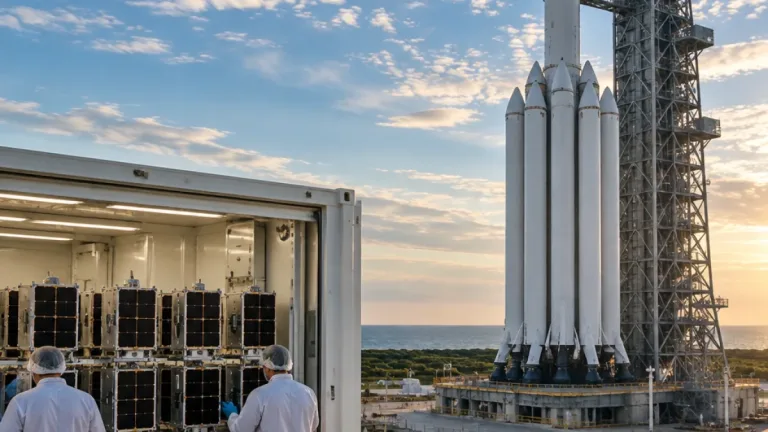
The Starlink deployment gives the mission an operational payload in addition to its recovery demonstrations. The 26 satellites are described as the company’s most advanced Starlink satellites, and their delivery is planned shortly after the spacecraft’s arrival in orbit.
Earlier full-scale Starship tests ended differently. The spacecraft sections of the previous 14 Starship flights reached the ocean either through planned end-of-flight disposal or after accidents. During the first full-scale test in 2023, multiple engines failed to ignite and the rocket’s self-destruct system was activated. Friday’s flight advanced beyond those earlier outcomes by reaching orbit, while leaving the booster recovery and spacecraft capture objectives still to be completed.
- The booster recovery attempt ended with an automatic abort and a splashdown in the Gulf of Mexico.
- The spacecraft reached orbit and prepared to deploy 26 Starlink satellites.
- SpaceX plans a first attempt to catch the spacecraft at the Texas launch pad after its orbital circuit.