Tutor Intelligence has raised $75 million in Series B funding to increase production and deployment of its industrial robots and develop AI models trained on work performed in factories and warehouses.
The round was led by Andreessen Horowitz, with participation from Union Square Ventures and Neo. The investment brings Tutor’s total funding to $117 million, according to the company.
Funding production and model development
Tutor said the new capital will support research into robot foundation models as well as manufacturing and deployment of its Sonny and Cassie robots. The Massachusetts startup develops both the machines and the software that controls them, rather than relying solely on third-party equipment.
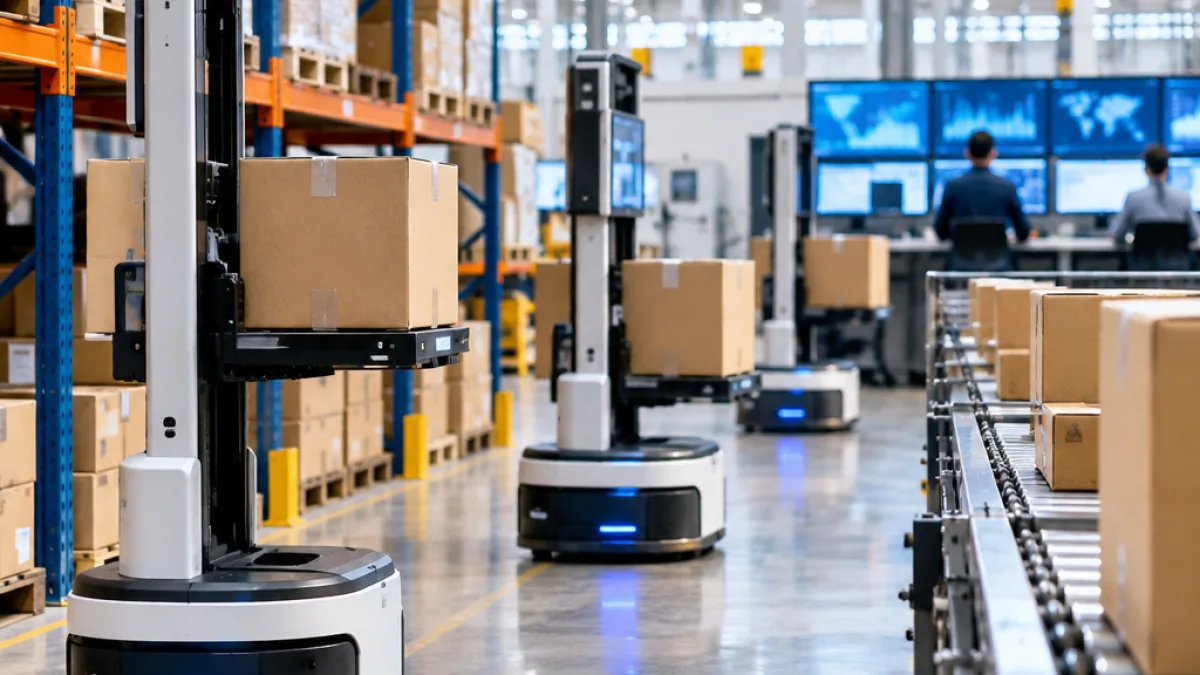
The company’s systems are designed for manufacturing and logistics work, including lifting, moving and manipulating goods. Tutor said its robots currently operate across major U.S. manufacturing and logistics networks, handling consumer products such as cereals, snacks, candy, cosmetics and toys.
- Round: Series B
- Amount: $75 million
- Lead investor: Andreessen Horowitz
- Total funding: $117 million
- Participating investors: Union Square Ventures and Neo
A data-driven deployment model
Tutor’s operating model links customer deployments to continued AI training. Its internet-connected robots collect data while performing tasks, which the company uses to improve its models. Updated software can then be distributed across the robot fleet, allowing the machines to take on additional tasks as their capabilities develop.
Human operators, known as tutors, provide remote assistance when a robot needs support. Customers pay by the hour or by the item picked, rather than purchasing equipment upfront or signing long-term contracts, according to the company’s description of its commercial model.
Tutor reported that its robots are operating in almost four times as many facilities as they were a year ago. The company is targeting more than 1,000 robots under contract by the end of 2027. That goal would expand the scale at which Tutor gathers operational data while increasing the number of sites where its systems are deployed.
Competition for industrial AI deployments
The financing places production capacity and real-world data collection at the center of Tutor’s expansion plan. Instead of treating hardware sales as the sole source of growth, the company is combining robot deployments, usage-based payments, remote support and software updates into one operating system for industrial customers.
Tutor’s strategy also reflects a broader effort among robotics startups to use factory and warehouse activity as training data for more capable machines. The company said its robots can improve through repeated work across customer operations, while the resulting models can be sent back to the fleet. The Series B will provide capital for both sides of that process: building more robots and advancing the AI systems that operate them.