
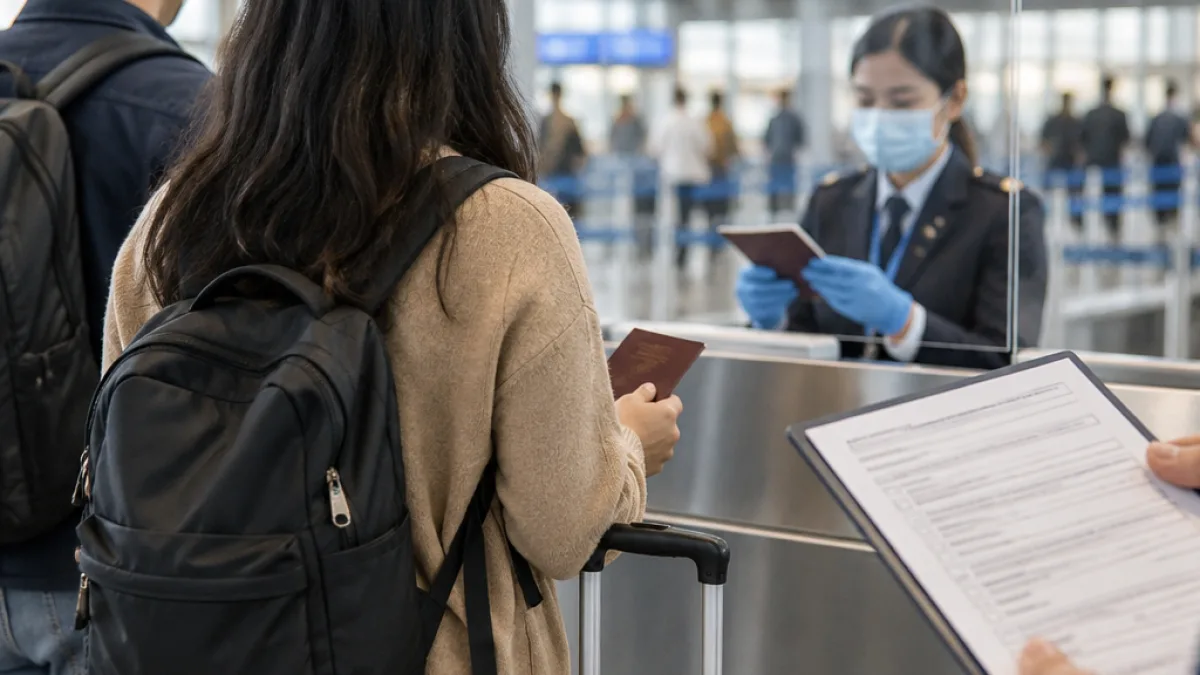
The Centers for Disease Control and Prevention will require people traveling to the United States from abroad to sign an Ebola-related attestation beginning at 11:59 pm EST on Tuesday, November 3, according to the reported policy. Travelers must confirm that they have not been in the Democratic Republic of the Congo during the preceding 21 days.
The measure is being introduced as the DRC confronts what the report describes as the second-largest Ebola outbreak ever recorded. More than 10,200 cases had been confirmed in the country as of October 27, with nearly 5,000 deaths. The U.S. State Department has issued a Level 4 “Do Not Travel” warning for the DRC, citing health, crime, unrest, terrorism and kidnapping risks.
The CDC says the risk to the United States remains low and that no cases have been reported in the country. The attestation requirement is intended to address the virus’s incubation period. Ebola can incubate for as long as 21 days, meaning an infected person could potentially travel before symptoms become apparent.
Who must complete the attestation
The requirement covers a broad range of people and aircraft rather than only foreign visitors arriving on scheduled airlines. The reported categories include:
- Adults and children traveling to the United States
- Passengers and crew members
- U.S. citizens, green card holders and foreign nationals
- People entering the country and those transiting through it
- Passengers on commercial flights, private jets, general aviation and cargo aircraft
A connection through a DRC airport counts as travel to the country under the policy, even if a passenger stays inside the terminal or does not leave the aircraft. That provision makes the attestation relevant to itineraries in which the DRC is only a transit point.
Rules for children and travelers who cannot sign
For a minor, a parent, guardian or other authorized person must complete the statement. A family member, travel companion or authorized representative may sign for an adult who cannot do so because of a disability.
The reported exceptions are limited to humanitarian cases and government-approved flights transporting Ebola patients. The policy therefore applies to most ordinary international aviation operations serving the United States, including flights that are not carrying passengers who have visited the DRC as their final destination.
Travelers who provide false or misleading information on the attestation may face criminal prosecution, according to the report. The requirement adds a public-health declaration to the procedures that airlines, private operators and other aviation personnel must handle before flights bound for the United States.