NASA’s Nancy Grace Roman Space Telescope is set to gain a major ground-based partner under an international observing program that will provide the Subaru Telescope with 100 nights of observing time. Coordinated work is expected to begin in 2027 or later, according to a news release.
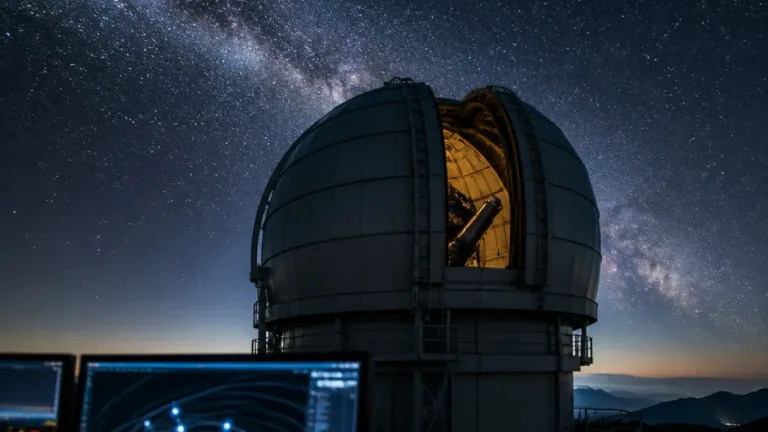
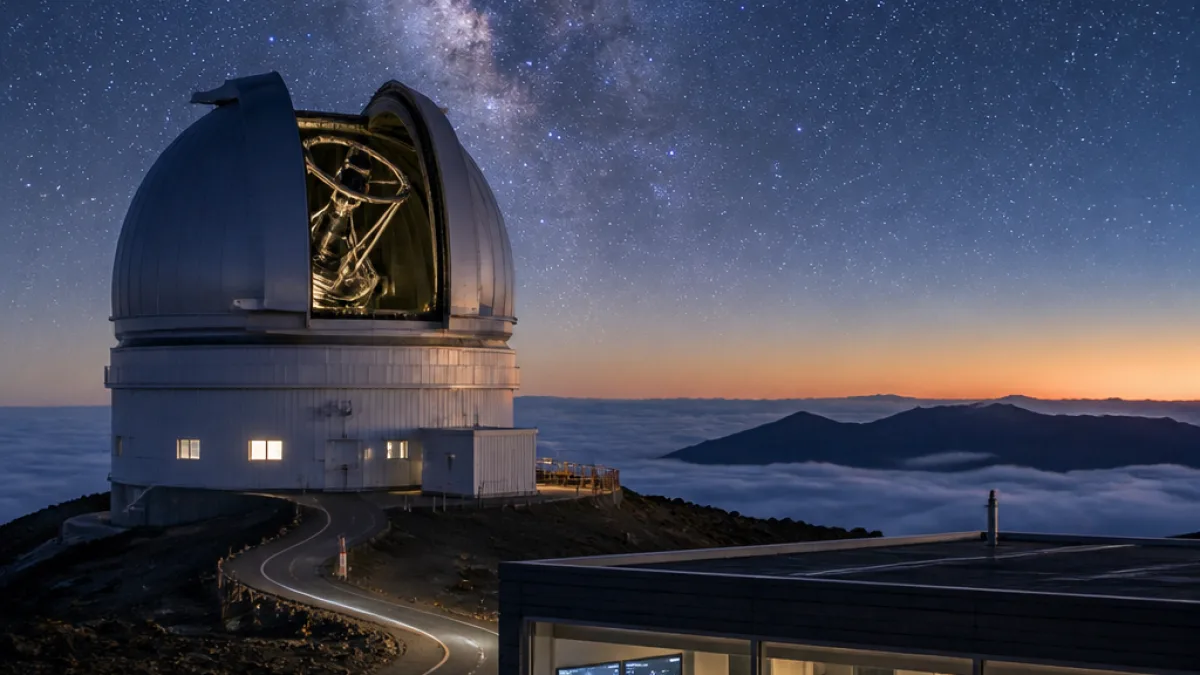
The arrangement pairs Roman’s view from orbit with the capabilities of the 8.2-meter Subaru Telescope on Maunakea in Hawaiʻi. Operated by the National Astronomical Observatory of Japan, Subaru has conducted astronomical research from the site for more than 25 years. Its location at approximately 10,000 feet above sea level provides a dry, dark and relatively unobstructed observing environment.
Two telescopes, different roles
Roman, a 2.4-meter space observatory, is designed to conduct wide-field surveys in optical and infrared wavelengths. Operating above Earth’s atmosphere will allow the spacecraft to make sensitive infrared observations across broad areas of the sky.
Subaru will provide follow-up observations from the ground. Its mirror and wide-field instruments can examine selected objects identified by Roman, adding information that a space-based survey alone may not provide. The telescopes will observe from different locations and use complementary capabilities rather than duplicate the same work.
| Observatory | Location | Primary contribution |
|---|---|---|
| Nancy Grace Roman Space Telescope | Space | Wide-field optical and infrared surveys |
| Subaru Telescope | Maunakea, Hawaiʻi | Ground-based optical-infrared observations and spectroscopy |
Following up on distant galaxies
A central part of the partnership will involve Subaru’s ʻŌnohiʻula Prime Focus Spectrograph, which can observe approximately 2,400 objects at once. That capability is intended to help astronomers study large numbers of galaxies and other targets that Roman identifies in its surveys.
Roman may locate distant galaxies and other objects, while Subaru can help determine their identities, distances and broader astronomical context. Combining those observations is expected to give researchers more information than either telescope could provide independently.
The partnership also underscores the continuing role of Maunakea in international astronomy. The site’s elevation, dry atmosphere, dark skies and position above much of Earth’s weather make it a valuable location for observations that complement data collected by observatories in space. The Subaru program will therefore connect a long-running ground-based facility with one of NASA’s newest space missions.
Roman was launched on Aug. 30. The planned observations with Subaru are not expected to begin until 2027 or later, making the effort a future observing program rather than a report of completed scientific results. Its stated purpose is to combine Roman’s wide-field discovery surveys with Subaru’s ability to gather detailed follow-up information on selected targets.