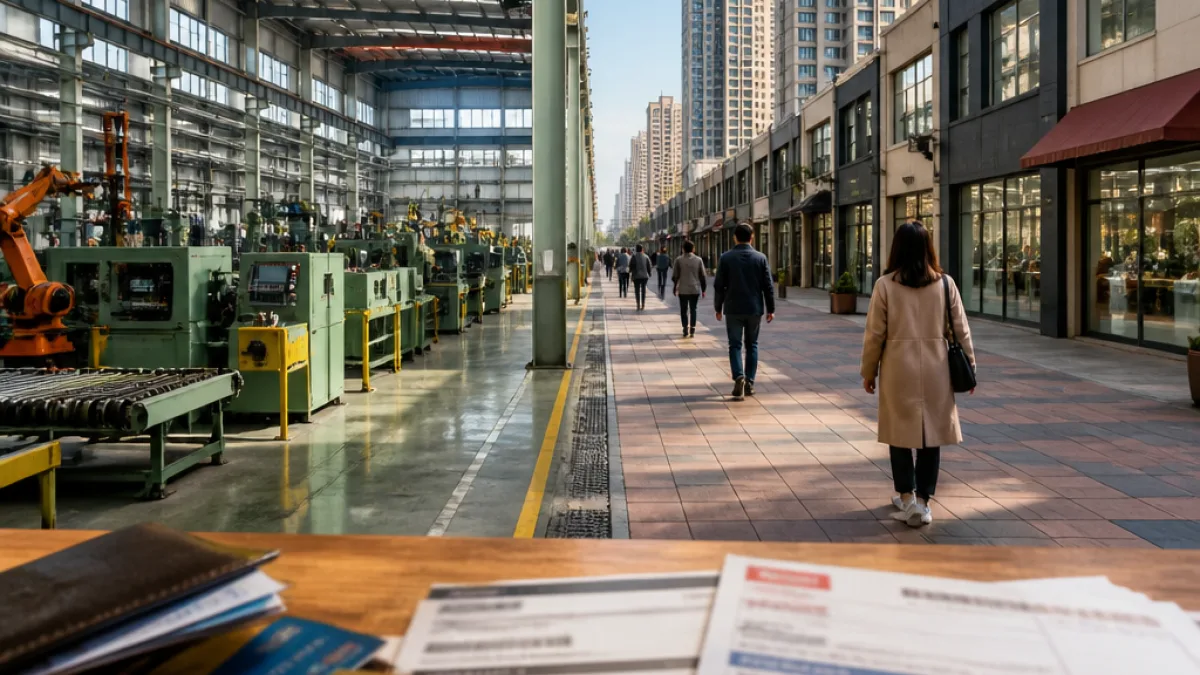
China’s effort to replace the property sector with advanced manufacturing and other industrial priorities is running into a weaker consumer economy, as falling incomes, job insecurity and rising debt pressure limit household spending. Businesses that depend on domestic demand are also holding back investment because sales remain sluggish.
Household financial stress is appearing in several forms. Credit card delinquencies are increasing even among middle-aged employees whose ability to repay had previously been viewed favorably by banks, according to the report. At the same time, the property downturn has reduced asset values, encouraging households to cut spending and making it harder for businesses serving the domestic market to expand.
Nonperforming debt rises sharply
Data reported by the South China Morning Post showed that newly registered debt on the Banking Credit Assets Registration and Circulation Center totaled CNY 148.1 billion in principal and interest during the third quarter. The amount was approximately USD 23.1 billion and represented an increase of about 50% from the previous quarter.
| Measure | Reported figure |
|---|---|
| Debt newly registered in the third quarter | CNY 148.1 billion, approximately USD 23.1 billion |
| Quarterly increase | About 50% |
| Share attributed to delinquent credit card debt | 35.2% |
| Debt registered from January through September | CNY 322.2 billion, approximately USD 49.1 billion |
Delinquent credit card debt represented 35.2% of the total, the largest share among the categories recorded on the official platform. Through October 22, 82 new debt portfolios had been registered, while cumulative registrations from January through September reached CNY 322.2 billion, approximately USD 49.1 billion. That nine-month total was up 26.4% from the same period a year earlier.
Stimulus meets a demand problem
The figures complicate Beijing’s attempt to offset the property slump by supporting advanced industries and expanding production capacity. More industrial output has not translated sufficiently into job and income growth, leaving household consumption without enough momentum to support a broad recovery. The report described the central dilemma for policymakers and companies in direct terms: increasing production does not necessarily create a market for additional goods when consumers remain cautious and domestic sales are weak.
That imbalance also affects private-sector investment. Businesses serving Chinese consumers have become reluctant to commit capital while revenue prospects remain uncertain. As a result, industrial support may increase supply without resolving the demand weakness that is discouraging companies from expanding and households from spending.
Banks increase loss provisions
Chinese banks are responding to the deterioration in repayment capacity as well as the growth in debt being offered for sale. Caixin reported that many listed Chinese banks recorded increases in troubled personal loans during the first half of the year. Their impairment provisions rose 17.8% from a year earlier, indicating that banks were setting aside more funds against potential losses.
- Household spending is being constrained by weaker incomes, job insecurity and lower property values.
- Businesses focused on the domestic market are delaying investment amid sluggish sales.
- Rising nonperforming debt is adding pressure to banks as China seeks growth from advanced industries.
The combined pressures point to a recovery problem centered not only on production but also on purchasing power. With households reducing consumption, businesses facing limited sales and banks increasing provisions, China’s industrial stimulus is being deployed against a domestic market that remains financially strained.