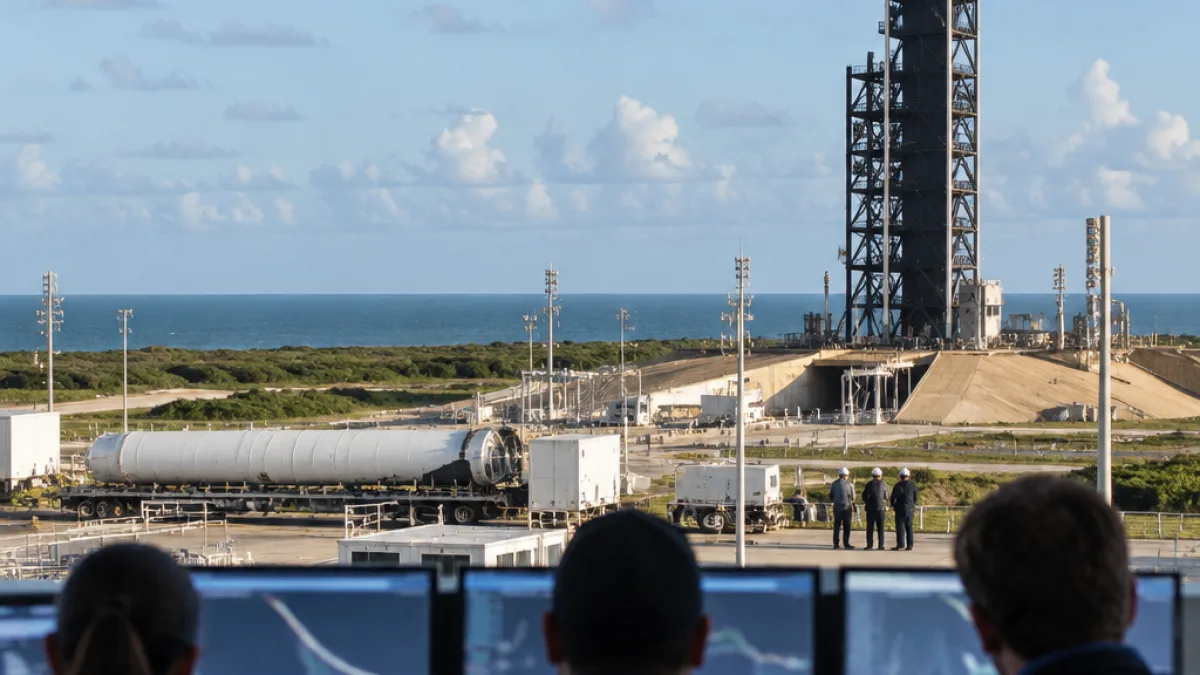
United Launch Alliance, the Boeing and Lockheed Martin joint venture, suffered the first complete mission failure in its history after a Vulcan rocket failed shortly after launch on Sunday, destroying all 40 Amazon Leo internet satellites aboard.
The rocket lifted off from Cape Canaveral, Florida, but experienced an in-flight anomaly about 10 minutes into the mission, ULA said. The failure prevented the vehicle from placing its payload into orbit. The cause has not been established and is expected to be examined through a technical investigation.
A setback for Amazon’s satellite network
The lost spacecraft were part of Amazon’s effort to build a global satellite-internet network intended to compete with SpaceX’s Starlink. Amazon had hoped to begin initial internet services this year, making the failed mission a setback for the timing of that program.
Before Sunday’s launch, Amazon had sent 398 satellites into orbit through 14 missions since 2025. Those launches represented about 12% of the 3,236 satellites planned for the company’s global network. The loss of a full launch batch removes a significant portion of the deployment capacity Amazon had assembled to date.
| Mission detail | Reported figure |
|---|---|
| Rocket | Vulcan |
| Operator | United Launch Alliance |
| Satellites lost | 40 Amazon Leo satellites |
| Failure timing | About 10 minutes after launch |
| Launch site | Cape Canaveral, Florida |
Potential impact on U.S. launch capacity
The incident could extend beyond Amazon’s deployment schedule. A technical review may ground Vulcan rockets for months, potentially affecting the availability of a launch vehicle used for other missions. Earlier Vulcan flights had encountered technical issues involving its solid rocket boosters and core engines, although those missions successfully delivered their payloads.
ULA’s previous successful flights had established Vulcan as an operating launch system, but Sunday’s failure will require the company to determine what went wrong before the rocket can return to service. The investigation is also likely to examine the vehicle’s hardware and the circumstances surrounding the loss of the payload, though no cause was identified in the announcement.
Amazon maintains relationship with ULA
Amazon said it continued to view ULA as a trusted launch partner and expressed confidence that the company would learn from the failed mission. The statement preserves the relationship between the two companies as Amazon works to expand its Leo constellation and ULA responds to its first total mission loss.
- All 40 Amazon satellites on the Vulcan rocket were lost.
- ULA reported an in-flight anomaly and has not identified its cause.
- A technical investigation could keep Vulcan rockets grounded for months.