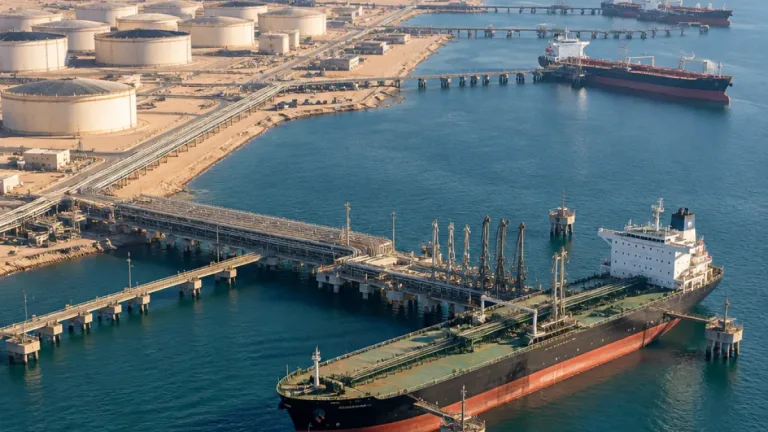
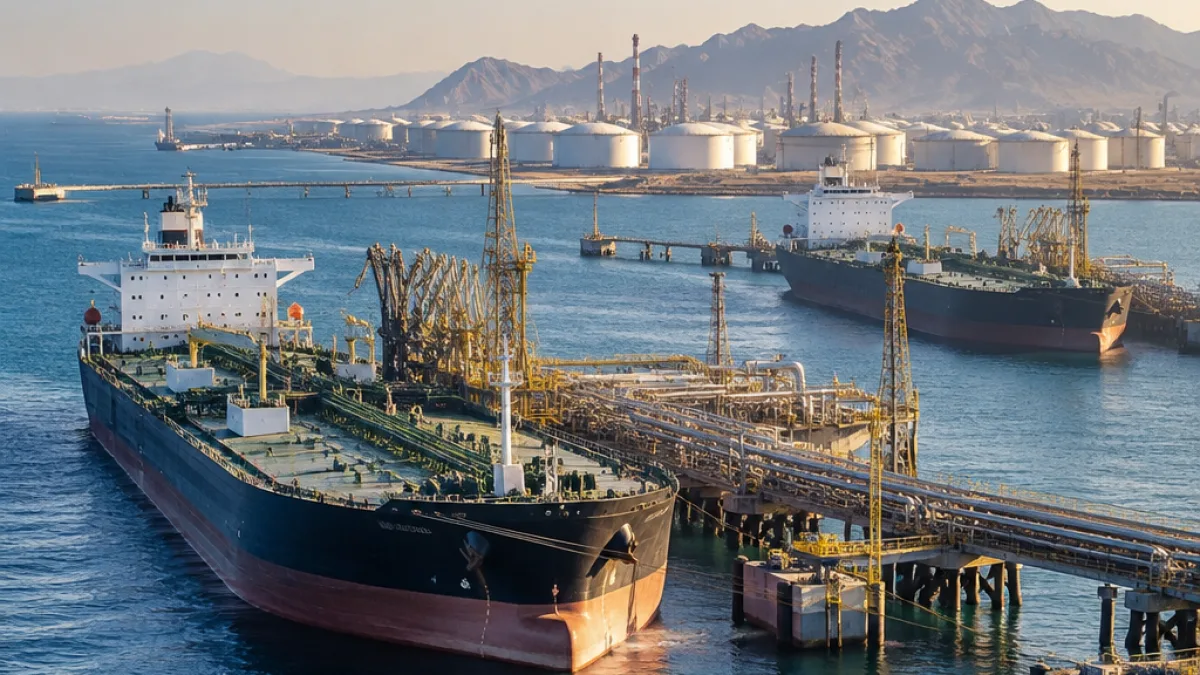
OPEC and its partner producers increased crude output sharply in October, with Saudi Arabia accounting for more than half of the monthly gain as the alliance moved closer to the production levels recorded in 2025. The increase comes as oil markets continue to balance recovering supply against security concerns in West Asia, including risks affecting routes connected to the Strait of Hormuz.
According to OPEC’s November Monthly Oil Market Report, countries participating in the Declaration of Cooperation raised production by about 2.04 million barrels per day from September. Their combined output averaged 41.23 million barrels per day in October, compared with an average of 41.98 million barrels per day for 2025.
Saudi Arabia drives the monthly increase
Saudi Arabia supplied most of the additional crude, based on secondary-source estimates cited in the report. Its production increased by 1.18 million barrels per day to 9.19 million barrels per day in October. Iraq added 496,000 barrels per day, reaching 4.49 million barrels per day, while Kuwait increased production by 232,000 barrels per day to nearly 2 million barrels per day.
| Producer or group | October output or change |
|---|---|
| Declaration of Cooperation participants | 41.23 million barrels per day; up about 2.04 million month over month |
| Saudi Arabia | 9.19 million barrels per day; up 1.18 million |
| Iraq | 4.49 million barrels per day; up 496,000 |
| Kuwait | Nearly 2 million barrels per day; up 232,000 |
The report also showed a substantial difference between the Saudi production figure derived from secondary sources and the number supplied through direct communication. On the latter basis, Saudi Arabia’s October output was reported at 10.56 million barrels per day, compared with 8.37 million barrels per day in September.
Supply recovery remains uneven
Although October’s production was close to the 2025 average, the recovery has not followed a steady path. Output from the group fell to 34.29 million barrels per day in the second quarter of 2026 before rising to 38.35 million barrels per day in the third quarter. The figures point to a year marked by substantial changes in the amount of crude returning to the market.
Oil prices have eased from recent highs, but the market has not fully removed the risk premium associated with geopolitical events. Traders have continued to monitor tensions around West Asia, particularly the security of energy shipments and maritime traffic linked to the Strait of Hormuz. Attacks involving oil depots, gas fields and tankers have added uncertainty even as production from major OPEC+ members recovers.
Key October production changes
- OPEC+ output: 41.23 million barrels per day, an increase of about 2.04 million barrels per day from September.
- Saudi Arabia: 9.19 million barrels per day under the secondary-source estimate, up 1.18 million barrels per day.
- Wider recovery: Group output rose from 34.29 million barrels per day in the second quarter to 38.35 million barrels per day in the third quarter before the October increase.
The combination of higher production and continuing geopolitical exposure leaves crude markets responding to two competing forces: more barrels from the world’s largest producer alliance and persistent uncertainty over the movement of oil through a strategically important region.