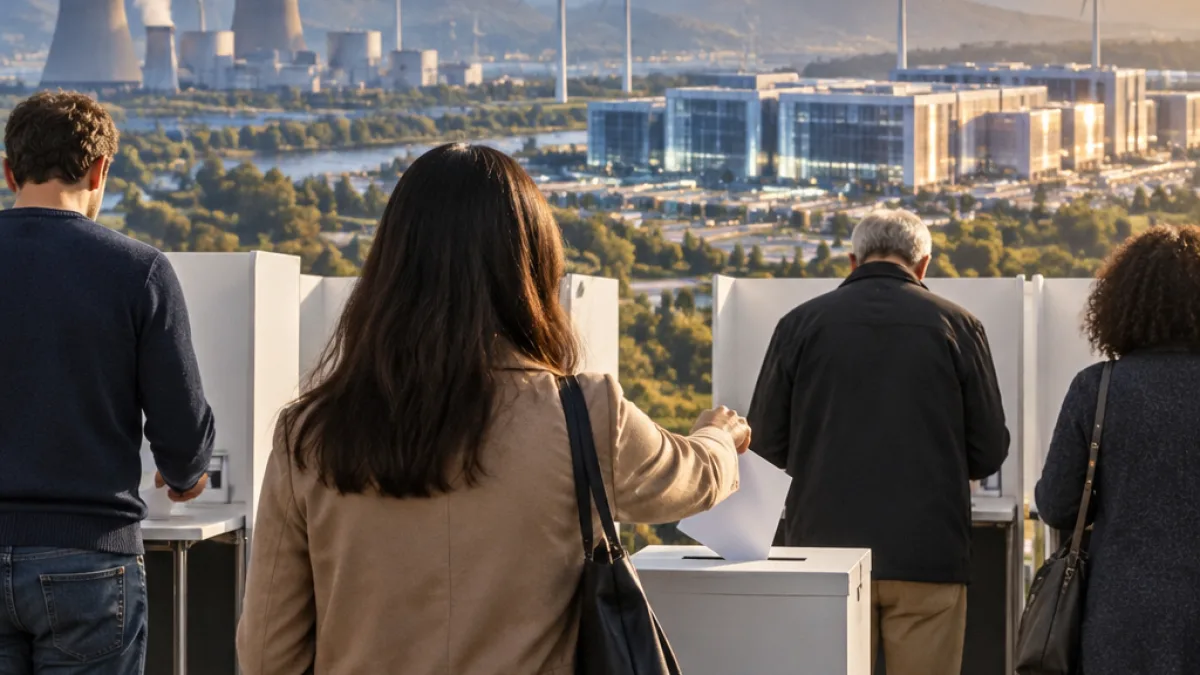
Taiwan’s November 28 referendum will put the island’s nuclear policy at the center of an energy debate with implications for electricity reliability, liquefied natural gas demand and the power supply supporting its semiconductor industry.
The ballot asks voters whether they support ending the government’s “non-nuclear homeland” policy and using nuclear power to revitalize the economy. The referendum will be held alongside local elections. The Central Election Commission is organizing five televised forums ahead of the vote, including a recent session that brought together a nuclear-power supporter and a government representative.
A question of time and electricity supply
Chen Jong-shun, an associate research fellow at the Chung-Hua Institution for Economic Research’s Center for Green Economy, argued in favor of the proposal. He said Taiwan had become too dependent on natural gas while renewable-energy development had not met expectations. His argument centered on the time needed to build power infrastructure as electricity demand increases.
“What Taiwan lacks most right now is neither goals nor technology, but time,” Chen said.
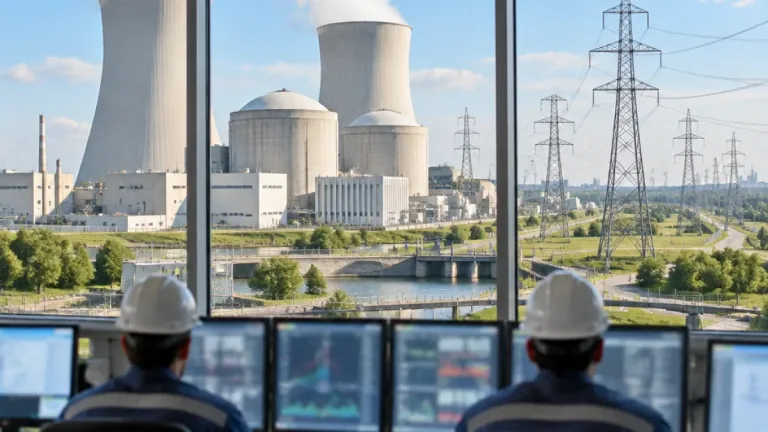
Chen said AI data centers and advanced chip plants can be built more quickly than major electricity infrastructure. Citing estimates from the nuclear industry, he said reactors could be restarted within 18 months to three years. In his view, that could provide reliable, lower-carbon electricity while Taiwan continues expanding renewable generation.
Chen said nuclear power should complement, rather than replace, investment in renewables. He also argued that restarting the No. 2 and No. 3 nuclear power plants could reduce Taiwan’s reliance on shipments of liquefied natural gas, an important consideration for an island whose electricity system depends heavily on imported fuel.
Government challenges the economic case
Lai Chien-hsin, Taiwan’s vice minister of economic affairs, argued against the referendum proposal during the televised forum. Lai questioned the need for a referendum when assessments of possible reactor restarts were already proceeding under existing law.
He also disputed the claim that restoring nuclear power was necessary to strengthen the economy. Lai pointed to Taiwan’s economic growth and rising exports during a period when nuclear power’s share of electricity generation declined. He said the economy’s performance reflected industrial upgrading and the strength of Taiwan’s supply chains.
“Nuclear power is not a cure-all for the economy,” Lai said.
The debate reflects a broader policy tension: Taiwan is seeking more electricity for strategically important manufacturing and emerging AI infrastructure while also managing fuel-import exposure and its renewable-energy goals. The two sides presented different ways to address that challenge.
- Supporters say restarting reactors could provide additional time and dependable power while renewable capacity expands.
- Opponents argue that nuclear power is not required to sustain economic growth and question whether a referendum is necessary while restart assessments are already underway.
- The November 28 vote will determine whether voters support ending the non-nuclear homeland policy and using nuclear power as part of an economic strategy.
The referendum does not settle every operational question surrounding the reactors, but it would establish whether voters support reversing the policy direction. The forum showed that the disagreement extends beyond the electricity mix: it also involves the pace of infrastructure construction, exposure to LNG shipments and the power requirements of Taiwan’s chip and technology industries.