
India is expected to remain the fastest-growing major emerging economy in 2027, according to a Goldman Sachs outlook that also identifies artificial intelligence investment and easing energy costs as important supports for global activity.
Goldman Sachs projects India’s economy will expand 7.2 per cent in 2027, ahead of the market consensus estimate of 6.8 per cent. The bank estimates growth of 7.9 per cent for 2026, indicating a moderation next year while still placing India ahead of other major emerging economies.
China’s growth is forecast to slow to 4.5 per cent in 2027. Goldman Sachs expects exports to provide some support despite the country’s real estate crisis and weak domestic consumption. The forecast contrasts with India’s stronger expected expansion and reflects differing conditions across the two largest economies in Asia.
AI investment becomes a larger growth factor
The global economy is projected to grow 2.8 per cent in 2027, slightly above the 2.7 per cent estimated for 2026. Goldman Sachs said lower energy prices and heavy investment in AI could help offset tight financial conditions. The bank also expects the United States, Japan and the United Kingdom to grow faster than market forecasts.
Global nominal investment in AI is projected to rise from $1.1 trillion in 2026 to $1.8 trillion in 2027. The increase is expected to be driven largely by spending on hardware in the United States. Goldman Sachs estimates that AI investment will add 0.4 percentage points to global GDP growth.
- India’s projected 2027 growth: 7.2 per cent
- China’s projected 2027 growth: 4.5 per cent
- Global projected 2027 growth: 2.8 per cent
- Projected global AI investment in 2027: $1.8 trillion
South Korea and Taiwan are expected to benefit from continued global demand for AI-related exports, according to the outlook. The report also says hardware spending in the US alone could increase by more than $500 billion, linking the AI investment cycle to semiconductor and computing-equipment demand.
Energy prices remain central to the outlook
Goldman Sachs Chief Economist and Head of Research Jan Hatzius identified energy costs, technology investment and government fiscal policies as the main forces shaping global growth. The bank expects lower energy prices to support economic activity after energy costs acted as a drag on growth in 2026.
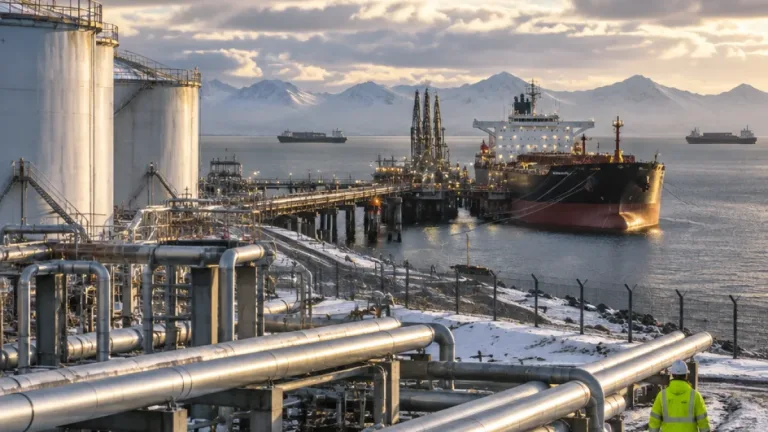
Brent crude is forecast to decline to $78 a barrel by the end of 2027, while liquefied natural gas prices are expected to moderate gradually. European economies, however, are expected to continue facing pressure from higher energy costs as earlier increases continue to affect consumers.
The outlook describes a global expansion that remains moderate rather than rapid. Its growth assumptions depend on the continuing expansion of AI-related investment, lower energy costs and fiscal policy support, while tighter financial conditions remain a constraint on economic activity.