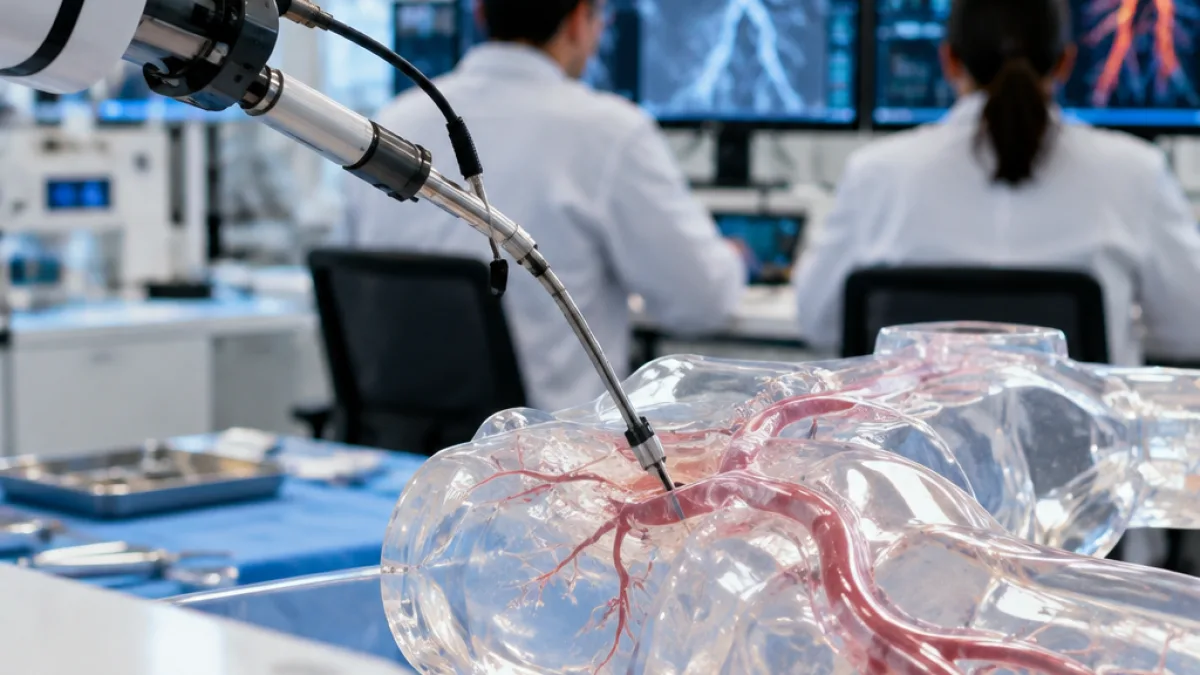
Remedy Robotics has raised $62 million in Series B funding to advance development of its N1 System, an AI-enabled robotic platform for endovascular procedures. The company’s initial regulatory focus is neurovascular intervention, including procedures used to treat stroke, although the system remains under development and is not approved for sale or clinical use in any jurisdiction.
DCVC led the financing. New investors UC Investments, Skip Capital and Hostplus joined existing backers Build Collective, Blackbird, Divergent Capital and KdT Ventures, according to Remedy. The company said the capital will support a planned pivotal clinical trial with the University of California, prototype deployments with clinical partners and continued development of the system’s autonomous capabilities.
Funding will support clinical development
The N1 System is being developed for use in neurovascular, coronary and peripheral vascular care. Remedy’s near-term regulatory work is centered on neurovascular procedures, rather than all three areas. The company describes the platform as intended for on-site, remote and autonomous endovascular interventions, but its current development status means those capabilities have not translated into authorization for clinical use.
| Round detail | Information |
|---|---|
| Financing | Series B |
| Amount | $62 million |
| Lead investor | DCVC |
| New investors | UC Investments, Skip Capital and Hostplus |
| Planned use | Clinical trial, prototype deployments and autonomous-capability development |
Remedy co-founder and CEO Dr. David Bell said the financing is intended to accelerate development and deployment so specialized intervention can reach patients without depending on their proximity to a hospital with the relevant expertise.
“Endovascular intervention is the gold standard treatment for stroke and many cardiovascular emergencies, yet access remains limited to a small number of hospitals,” Dr. David Bell, co-founder and CEO of Remedy Robotics, said. “For these time-critical conditions, that’s devastating. Even when specialist intervention is available, treatment is often delayed, and complications are frustratingly common.”
Next steps for the N1 System
Remedy’s stated next steps include conducting the clinical trial in partnership with the University of California and placing prototype N1 Systems with clinical partners. The company also plans to continue work on autonomous functions as it advances toward clinical testing and potential FDA approval.
The financing places the company at a development stage before commercialization: Remedy has identified clinical and regulatory milestones, but the N1 System is not currently available for sale or clinical use. Any future authorization would depend on the company’s clinical development and the FDA review process.
- $62 million raised in the Series B round
- DCVC led the financing, with participation from new and existing investors
- A planned University of California clinical trial is among the company’s next steps