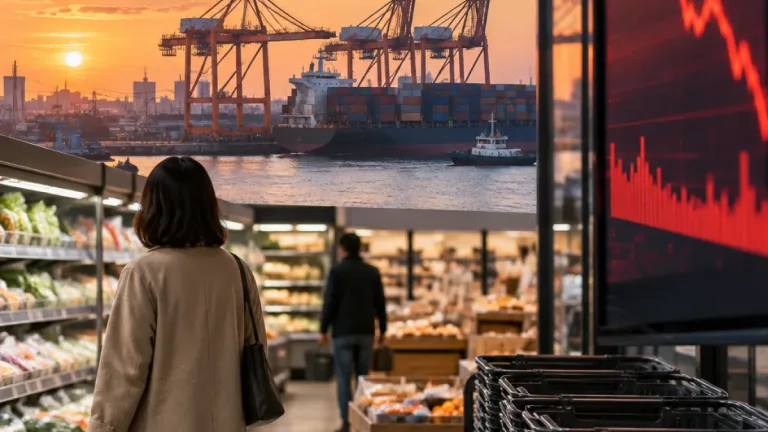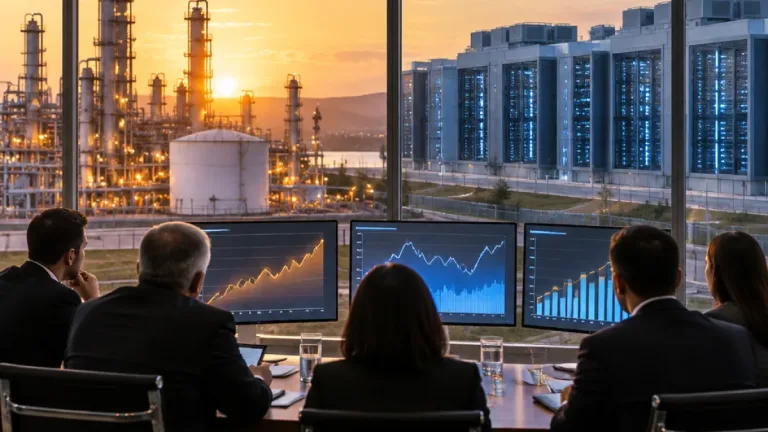
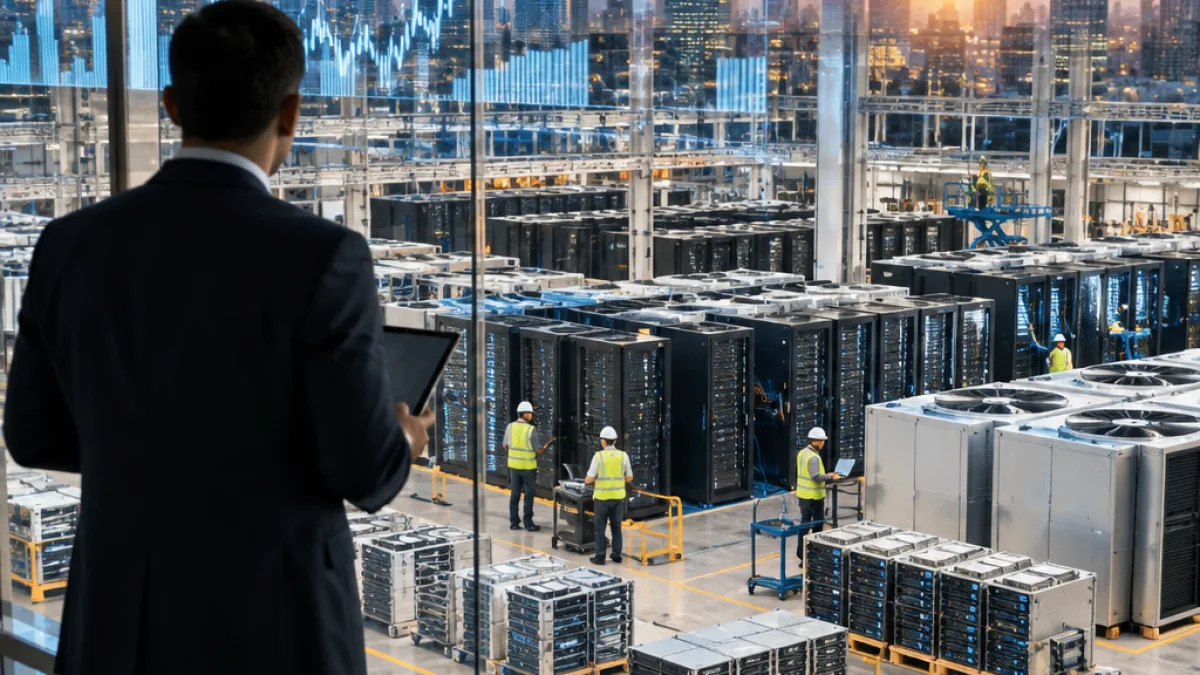
Former Securities and Exchange Commission Chair Gary Gensler warned in an interview with CNN published on November 16, 2026, that the scale of investment in artificial intelligence could eventually destabilize financial markets and push the United States into a recession before the November 2028 presidential election.
Gensler, who led the SEC from 2021 until 2025 and now teaches at MIT, estimated that annual spending on AI infrastructure could reach $800 billion. He pointed to the rapid construction of data centers, purchases of advanced computer chips and other computing equipment, and questions about whether the industry can produce sustainable profits at the pace required to justify that investment.
“It’s already a bubble,” Gensler said.
His warning centers on the gap between the resources companies are committing and the revenue or profitability that may ultimately support those commitments. Gensler said the current cycle shares features with earlier technology and infrastructure booms that attracted large amounts of capital before reaching a plateau and experiencing a sharp correction.
The risks Gensler identified
- AI infrastructure investment could approach $800 billion annually.
- Big technology companies are spending five times more in 2026 than they did three years ago, according to Gensler.
- Corporate borrowing, complex lending arrangements, circular financing and off-balance-sheet transactions add to his concerns.
Gensler compared the AI buildout with railroad expansion, electricity investment during the 1920s and the internet boom of the 1990s. In each case, he said, a new technology encouraged substantial infrastructure spending before the investment cycle weakened.
“History tells us that when you have a new technology and a significant investment…you come to a point where it plateaus. It retrenches,” Gensler said in the CNN interview.
The former regulator also linked the current spending race to competition among AI developers for increasingly advanced models and computing capacity. The effort to maintain technological superiority over China is another factor behind the expansion, he said. That combination has pushed major technology companies to increase capital expenditure substantially as they compete for chips, data-center capacity and other computing resources.
Gensler’s concern extends beyond the headline spending figures to the way some projects may be financed. He raised questions about complex lending structures, circular financing and transactions that remain outside company balance sheets. The extracted interview text did not provide further details about specific companies or transactions, but framed those mechanisms as potential sources of financial risk if expected AI profits fail to materialize.
A correction with wider economic effects
Gensler said the outcome could range from a relatively mild downturn to a more severe economic contraction. His warning was not a forecast from the Federal Reserve or another official economic agency; it was an assessment from a former securities regulator and current MIT instructor.
“The only question is if it’s a soft recession or something more dramatic,” Gensler said.
The comments arrive as large technology companies expand spending on the infrastructure required to develop and operate AI systems. Gensler’s comparison with earlier investment cycles highlights the financial consequences he associates with a possible reversal: a period of weaker demand or disappointing profits could expose companies and lenders to commitments made during the expansion.
He also recalled that earlier infrastructure booms had produced serious downturns after investment momentum faded.
“That railroad boom-to-bubble was quite an adventure, and it led to really deep recessions, depressions. The 1920s with electricity, the 1990s with the internet,” Gensler said.